
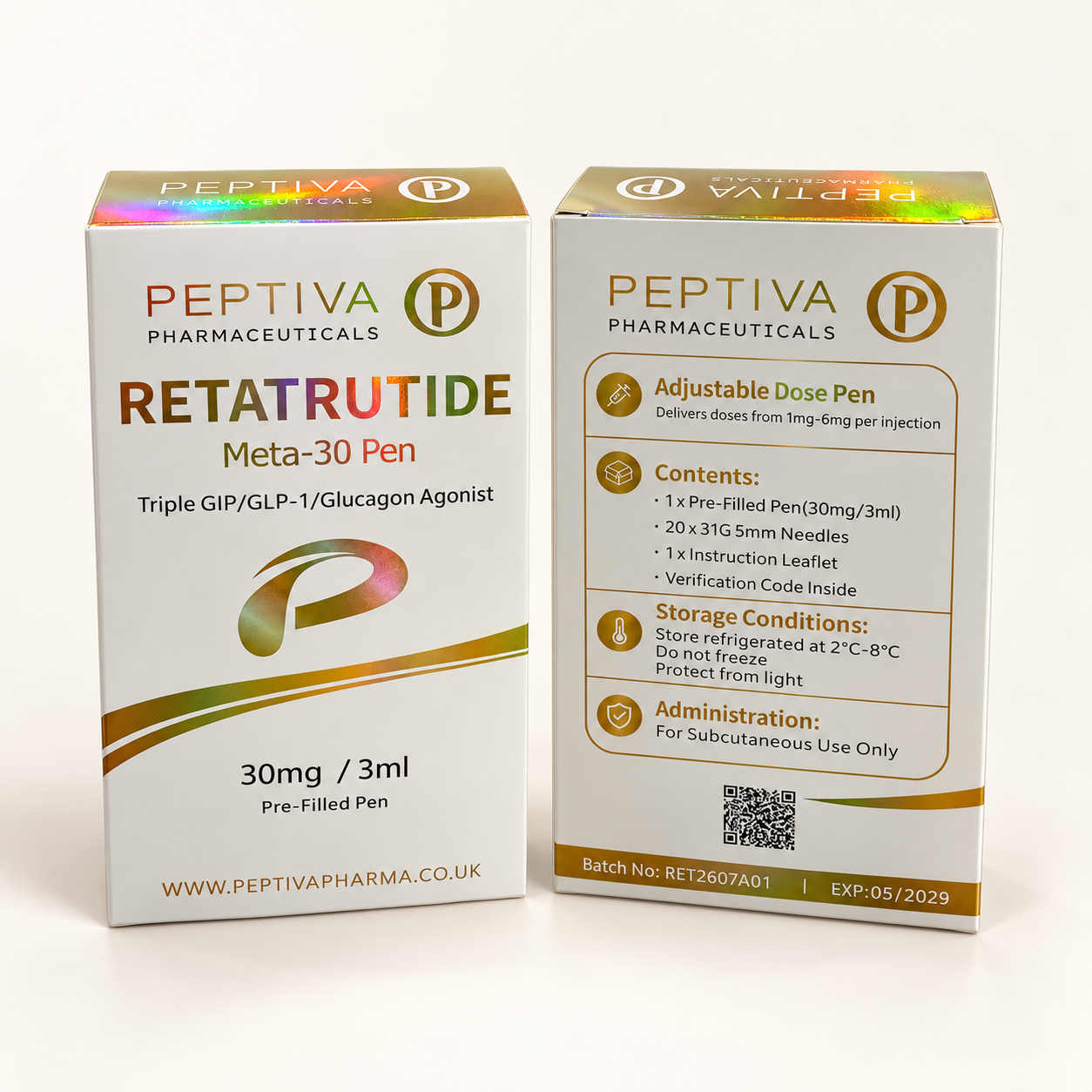
30mg/3ml · Pre-filled pen
Retatrutide Meta-30 Pen
Triple GIP / GLP-1 / glucagon receptor agonist peptide · 30mg/3ml research pen
Enquire to orderView →
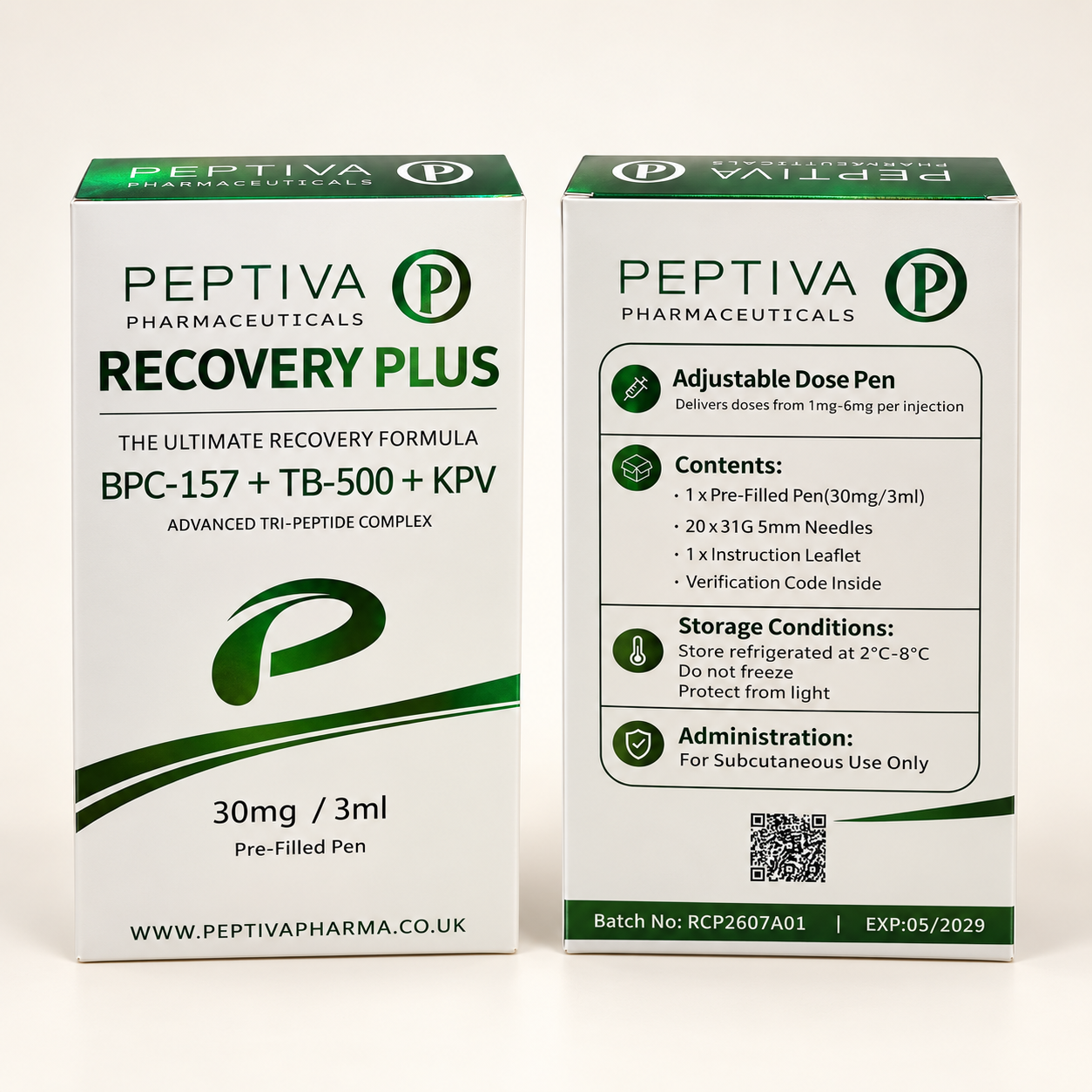
Front and back carton · Batch RCP2607A01 · EXP 05/2029
Pre-filled research pen
BPC-157 + TB-500 + KPV three-peptide research blend · 30mg/3ml research pen
Total strength
30mg/3ml
Format
Pre-filled pen
Batch
RCP2607A01
Expiry
05/2029
Enquire about this product
Enquire by WhatsApp Enquire by Email Verify this batch Request Certificate of AnalysisSupplied strictly for laboratory and in-vitro research. Not for human or animal use. Nothing on this page is dosing or administration guidance.
PEPTIVA RECOVERY PLUS PEN is a three-peptide research blend of BPC-157, TB-500 and KPV supplied as a single 30mg/3ml pre-filled research pen. The carton states a total peptide content of 30mg per 3ml; a verified per-ingredient split is not published for this blend.
BPC-157 is a synthetic 15-amino-acid peptide whose sequence is derived from a protein found in human gastric juice. Published research is almost entirely preclinical: rat and in-vitro studies have examined tendon, ligament, muscle and gut-lining injury models. There are no completed, published human efficacy trials, and BPC-157 is not an approved medicine in any country.
TB-500 is the name commonly given to a synthetic 7-amino-acid fragment (Ac-LKKTETQ, residues 17–23) of thymosin beta-4 (Tβ4), a naturally occurring 43-amino-acid protein that binds and sequesters actin monomers. The fragment corresponds to the actin-binding region of Tβ4. Human clinical trial evidence exists only for full-length Tβ4 (for example RGN-259 eye drops in dry-eye and neurotrophic-keratopathy studies) — it does not exist for the TB-500 fragment itself, whose published evidence is biochemical, structural and preclinical.
KPV (Lys-Pro-Val) is the three-amino-acid C-terminal fragment of alpha-melanocyte-stimulating hormone (α-MSH residues 11–13). Published cell studies report that KPV enters intestinal epithelial and immune cells via the PepT1 transporter and reduces NF-κB and MAPK signalling, and mouse colitis models (DSS and TNBS) reported reduced inflammatory markers after oral KPV. These are preclinical findings; no human efficacy data have been published.
How to read this evidence. Findings described above come from laboratory and animal studies unless stated otherwise. Preclinical results do not establish effects in humans, and no claim of healing, anti-inflammatory benefit or synergy between ingredients is made for this product. This material is supplied strictly for laboratory and in-vitro research — not for human or animal use.
BPC-157 · not stated Preclinical
Synthetic 15-amino-acid peptide derived from a gastric juice protein.
Rodent and in-vitro models of tendon, ligament, muscle and gut-lining injury. No published human efficacy trials.
TB-500 · not stated Preclinical / biochemical
Synthetic 7-amino-acid fragment (Ac-LKKTETQ) of thymosin beta-4 covering its actin-binding region.
Biochemical and structural actin-binding studies; preclinical extrapolation. Human trials exist only for full-length Tβ4 (ophthalmic), not the fragment.
KPV · not stated Preclinical
Lys-Pro-Val, the C-terminal tripeptide of alpha-MSH.
PepT1 uptake and reduced NF-κB/MAPK signalling in cell studies; reduced inflammatory markers in DSS and TNBS mouse colitis models.
Store refrigerated at 2°C–8°C. Do not freeze. Protect from light. (As printed on the carton.)
Batch RCP2607A01 · Expiry 05/2029. Scan the QR on the back of the carton or verify online. Certificates of Analysis available on request by email.
Supplied strictly as a research material for laboratory and in-vitro use only. Not for human or animal use. Not a medicine, supplement or cosmetic. No information on this page constitutes dosing, administration or therapeutic guidance.
Also in the range
Triple GIP / GLP-1 / glucagon receptor agonist peptide · 30mg/3ml research pen
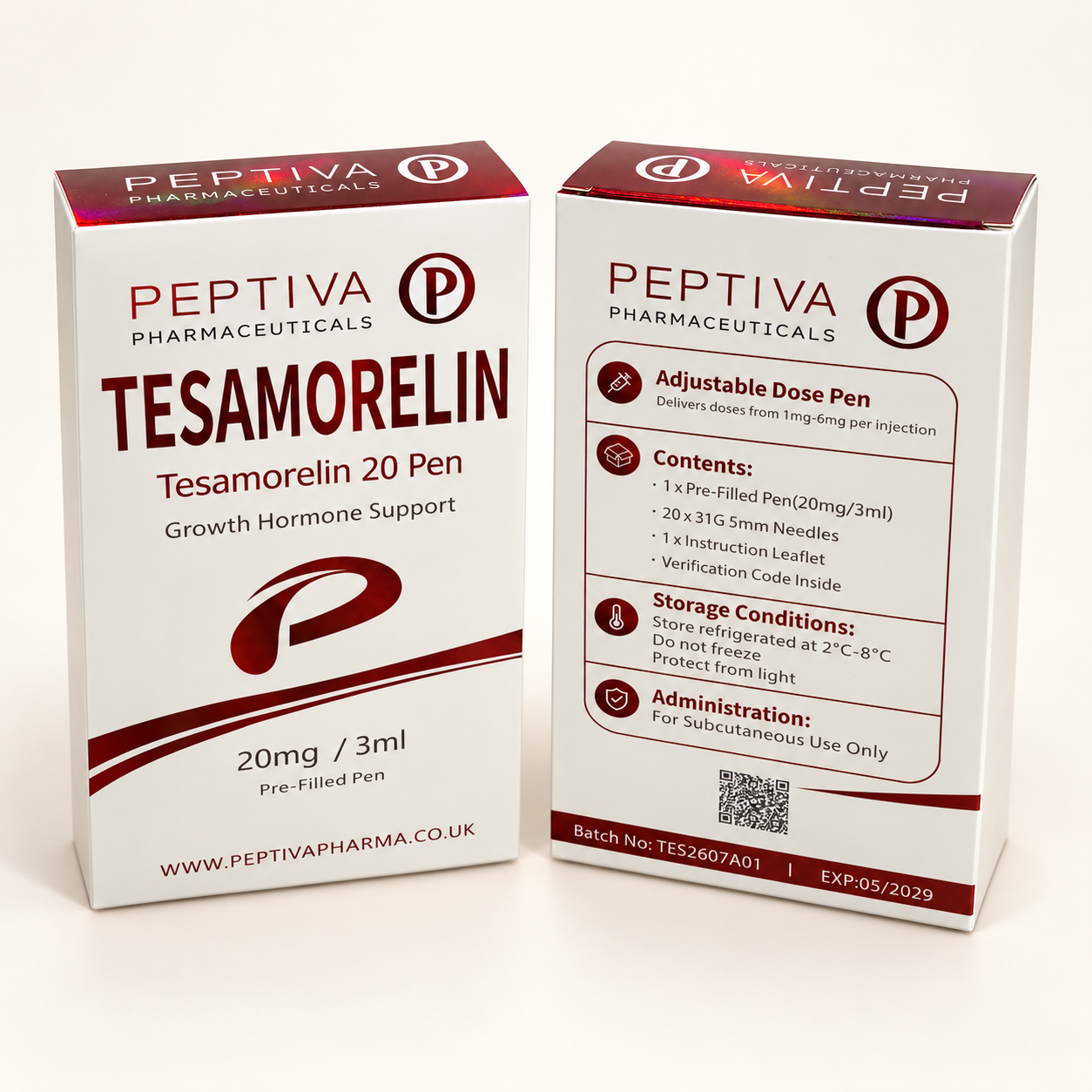
Tesamorelin · 20mg/3ml research pen